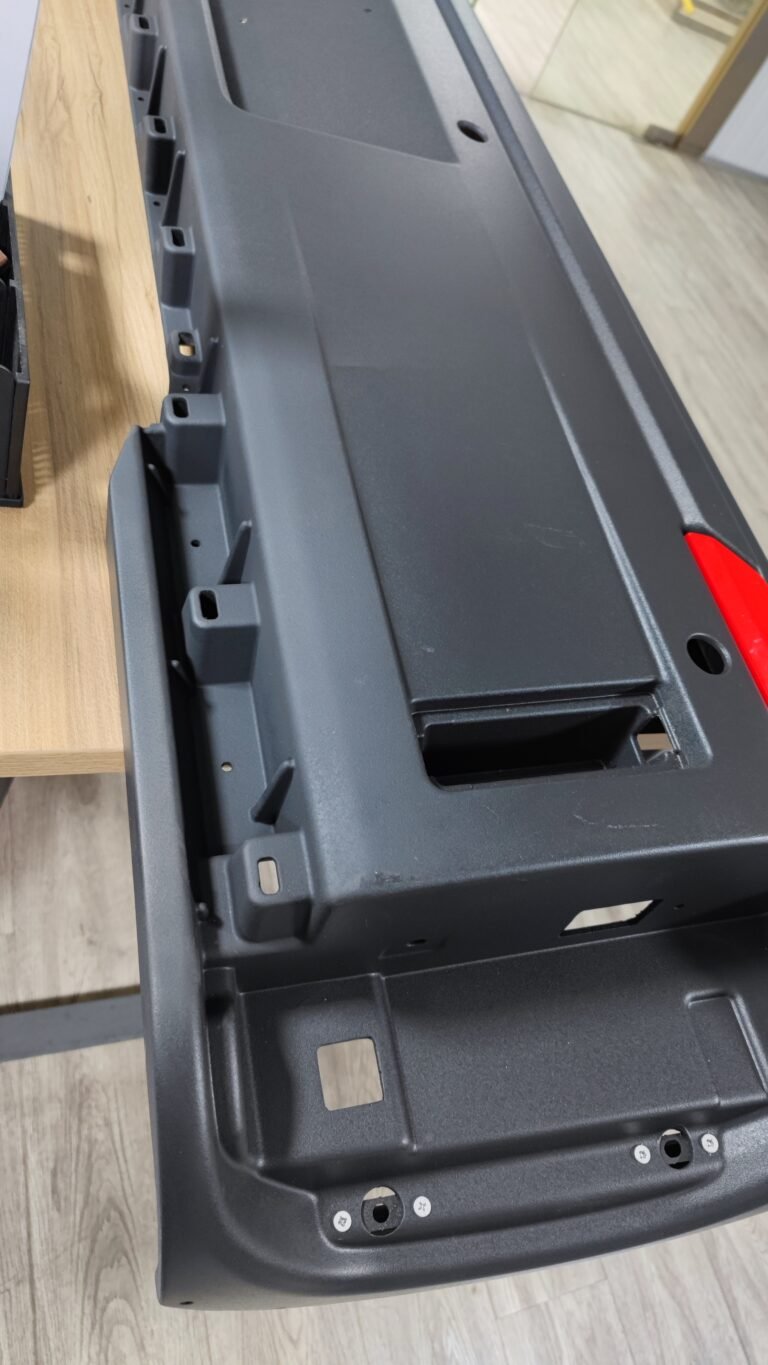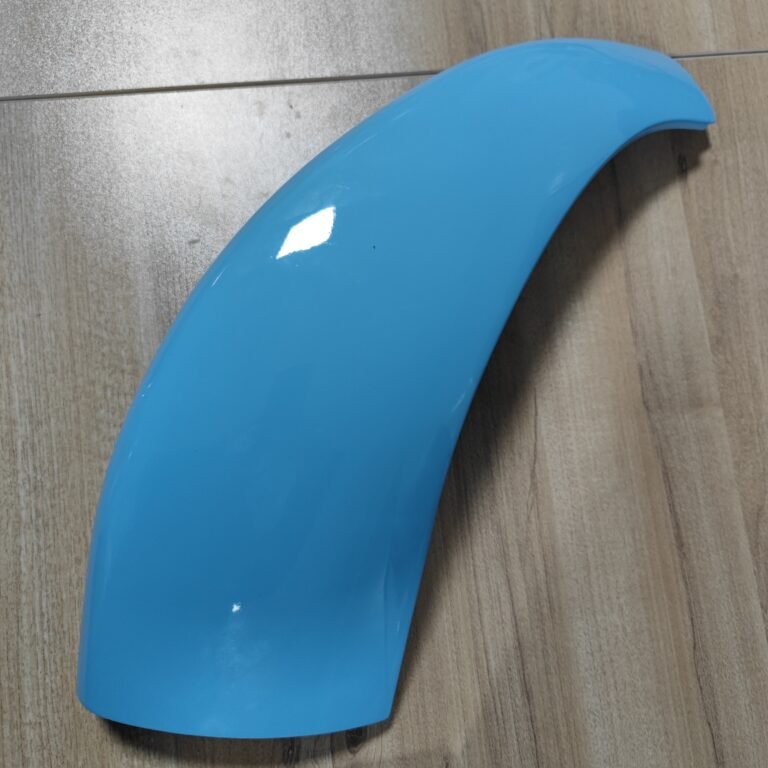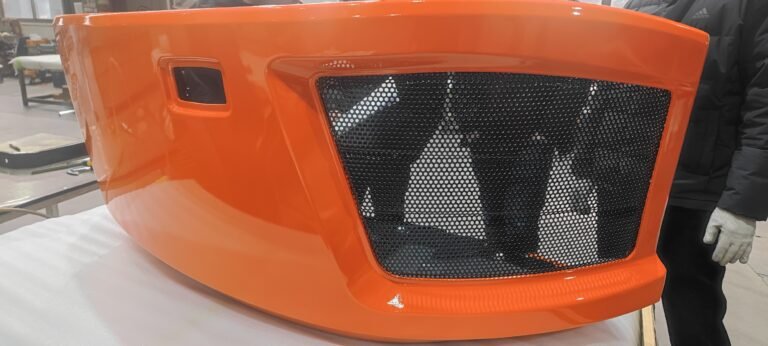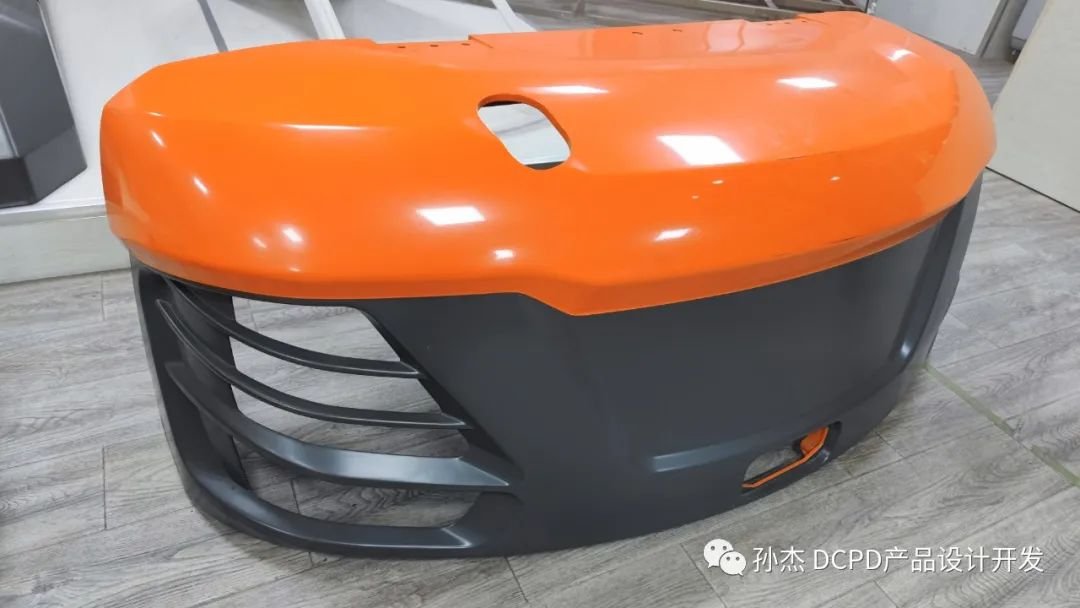
Poly-Dicyclopentadiene (PDCPD) is a favored material for large industrial components due to its exceptional impact resistance and design flexibility. However, due to the substantial surface area and the exothermic nature of the Reaction Injection Molding (RIM) process, deformation (warpage) can be a significant challenge. Ensuring dimensional stability requires a combination of thermal management, mechanical design, and post-molding handling.
I. Maintaining Uniform Molding Temperature
Temperature consistency is the foundation of structural integrity in PDCPD parts.
- Uniform Thermal Field: Ensure that the temperature across the entire mold cavity is consistent. Any significant temperature gradient will cause different areas of the part to polymerize at different rates, leading to internal stress.
- The Goal: By maintaining a synchronized reaction across the part, you minimize the “pull” of early-solidifying sections against late-solidifying ones, significantly reducing the risk of post-mold warpage.
II. Optimizing Draft Angles and Undercut Stripping
Large parts are prone to “clamping” onto the mold as they shrink, which can lead to mechanical deformation during the ejection phase.
- Adequate Draft Angles: In areas where the resin wraps around the core (male mold), it is essential to set sufficient draft angles. This allows the part to “release” instantly rather than being dragged against the mold surface.
- Undercut Path Design: For undercut features on the female mold, carefully design the ejection direction and path. If the geometry allows, design features that can undergo slight elastic deformation during removal without exceeding the material’s yield point.
III. Addressing Wall Thickness Irregularity
Uneven wall thickness is a primary driver of internal stress. Thick sections retain heat longer and shrink more than thin sections.
- Design Optimization: Work with product designers to transition gradually between different thicknesses.
- Impact: Reducing the disparity in wall thickness ensures a more uniform cooling rate, preventing the “bowing” effect common in large, flat panels.
IV. Professional Demolding Techniques
The manual process of removing a large part can inadvertently cause permanent bends if handled incorrectly.
- Sequential Removal: Always clear the flash (overflow) and the runner/gate areas first. This ensures the part is not “anchored” to the mold by scrap material during the main lift.
- Two-Person Operation: For oversized components, two operators should coordinate the lift to ensure the part is removed vertically and evenly. Uneven lifting forces while the material is still warm can easily introduce a permanent twist.
V. Utilizing Cooling and Shaping Fixtures
PDCPD continues its final chemical cross-linking for a short period after being removed from the mold.
- Post-Mold Shaping: Immediately after demolding, place the part into a dedicated shaping fixture (cooling jig).
- Function: These fixtures hold the part in its intended CAD geometry until it has fully cooled and the chemical reaction is complete. This is the most effective way to ensure that large-scale parts meet tight dimensional tolerances.