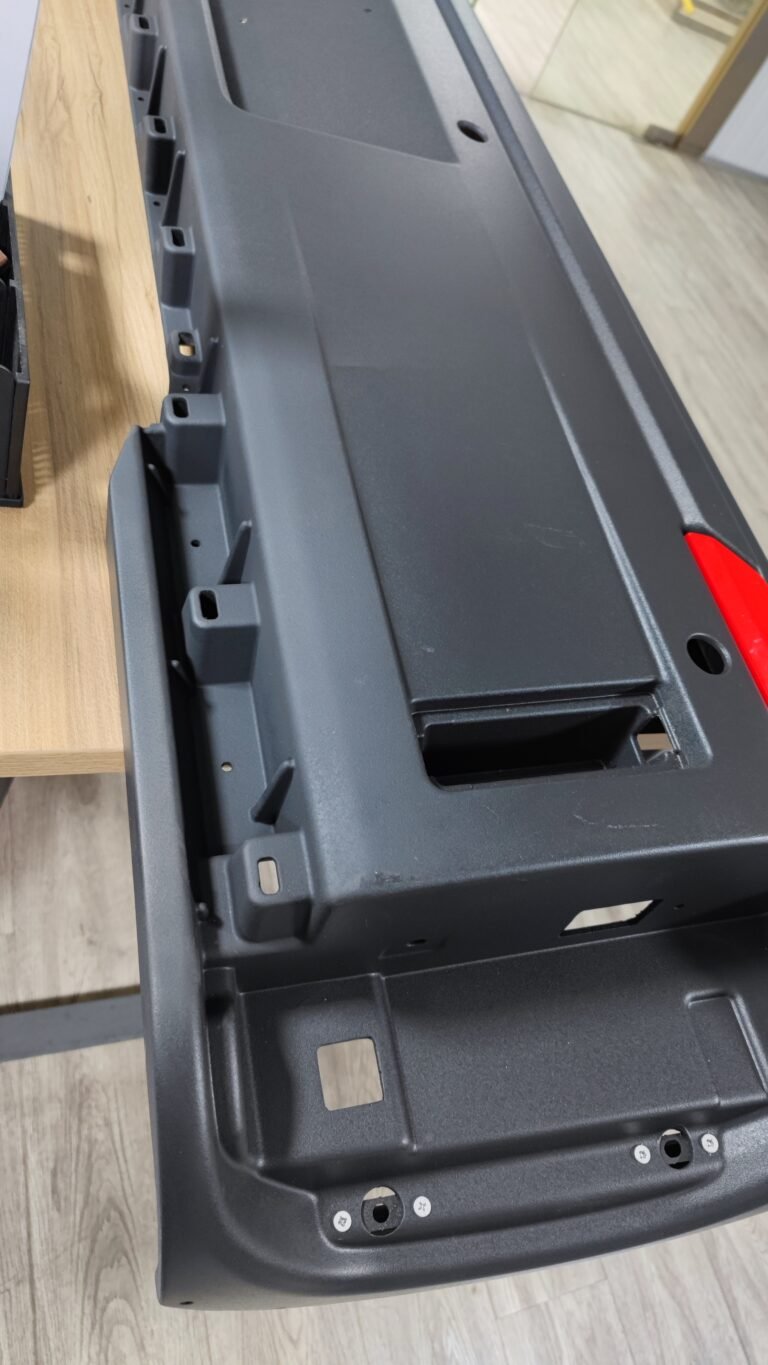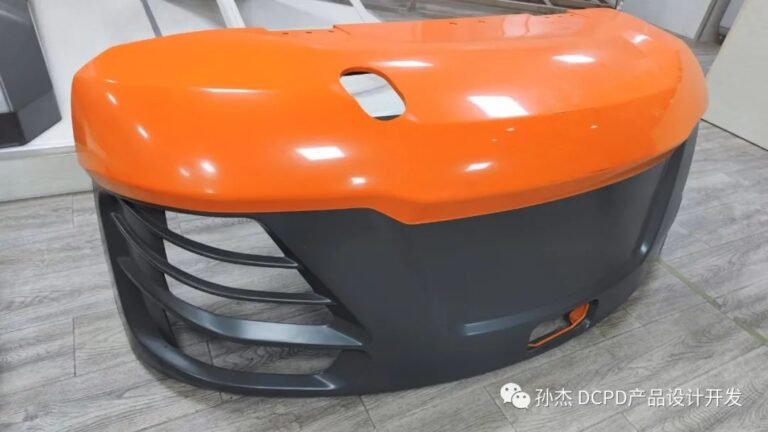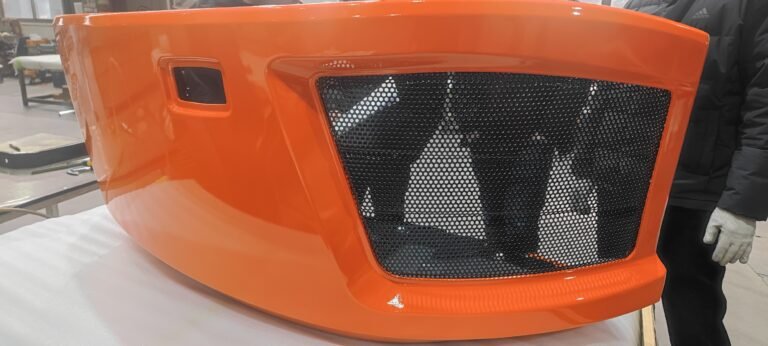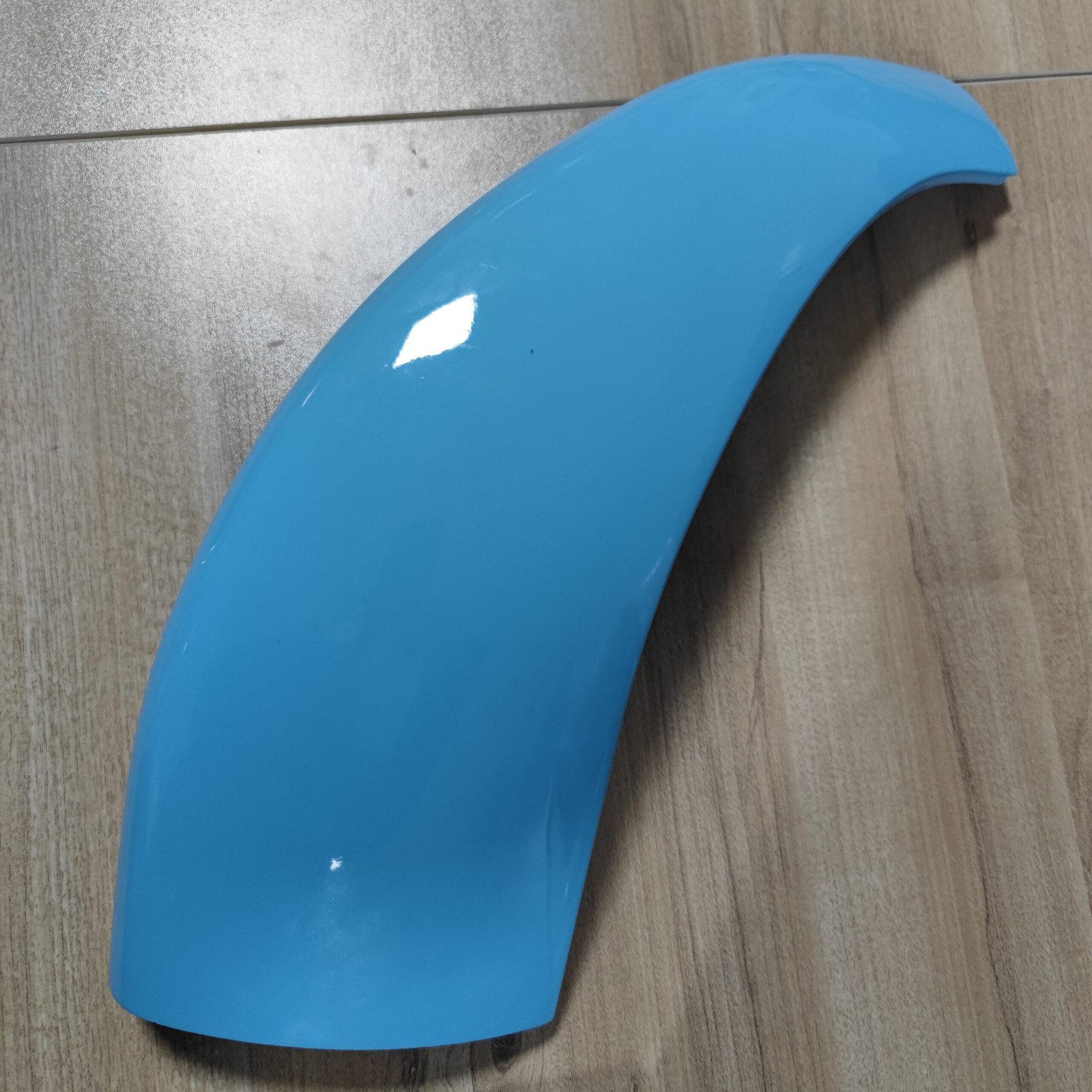
In PDCPD (Polydicyclopentadiene) Reaction Injection Molding, surface pinholes (often called “needle bubbles”) are a common quality challenge. These tiny clusters of bubbles on the part surface not only compromise aesthetics but can also lead to structural weaknesses. Based on industrial standards, solving pinhole issues requires a three-pronged approach focusing on mold surface quality, sealing integrity, and venting optimization.
I. Enhancing Cavity Surface Finish
The micro-topography of the mold cavity directly influences surface gas entrapment.
- Mirror Polishing: To ensure a Class-A surface, the mold cavity must undergo high-grade mirror polishing. Any microscopic roughness can trap air or moisture, which expands during the exothermic reaction of the PDCPD resin, resulting in pinholes.
- Steel Electroplating vs. Aluminum: While aluminum molds (such as 6061-T6) are cost-effective, long-term use leads to surface oxidation, forming microscopic pits or “craters.”
- The Professional Solution: Where budget allows, utilizing a steel mold with a hard chrome-plated surface (HRC 62) is highly recommended. The dense, plated layer prevents oxidation and provides a durable, ultra-smooth interface that significantly reduces the risk of pinholes compared to aging aluminum surfaces.
II. Ensuring Strict Mold Sealing
Air suction during the filling process is a primary culprit for “needle-like” foaming.
- Seal Integrity: PDCPD-RIM is a low-pressure process, but any gap in the mold parting line can act as a venturi, sucking air into the cavity as the resin flows.
- Maintenance of O-rings: Regularly inspect and replace rubber seals or O-rings. Ensure the mold alignment devices (interlocks) are functioning correctly so that the two mold halves maintain a perfect, airtight seal during injection.
III. Optimizing Venting Design and Cavity Pressure
The way air leaves the mold determines the final density of the part surface.
- Vent Specification: Vent thickness should be strictly controlled (typically around 0.1mm). Vents that are too thick cause excessive flash, while those that are too thin cause air entrapment.
- Pressure Management: By optimizing the location and size of vents, you can maintain a specific back-pressure within the cavity.
- The “Pressurized Molding” Effect: Increasing the resistance at the vents helps keep dissolved gases (like nitrogen) in solution during polymerization. This prevents the gases from nucleating into tiny bubbles, ensuring a solid, pinhole-free skin layer.
Conclusion
Eliminating pinholes in PDCPD parts is a balance of surface precision and pressure control. By upgrading to chrome-plated steel surfaces, maintaining rigorous sealing, and fine-tuning vent dimensions to increase cavity pressure, manufacturers can consistently achieve a flawless, high-density finish.